
Skip to content
Home/ Simulating the Marvellous: Psychology - Surrealism - Postmodernism (UK)
Simulating the Marvellous: Psychology - Surrealism - Postmodernism (UK)

Simulating the Marvellous: Psychology - Surrealism - Postmodernism (UK)

No customer reviews yet ISBN 9780719088827 Manchester University Press

Simulating the marvellous presents important new research on Surrealism and the culture from which it arose. Offering fresh interpretations of Surrealist art and literature based around the theme of simulation, the book shows, in the late nineteenth and early twentieth centuries, that the notion of simulation arose in a number of discrete contexts, in relation to hysteria and war neuroses; more broadly it shadows the emergence of our concept of 'the unconscious'.

Acknowledging simulation's relevance to Surrealism, this book argues, radically alters our understanding of the Surrealists' project and the terms in which one gauges its success or failure. It leads one to question the naïve assumption that automatic writing or drawing represent an authentic outpouring of the unconscious and gives renewed significance to a figure such as Salvador Dalí who embraced simulation and made it the basis of his art and aesthetic. Resonances are also explored with postmodern theory and art practice, around the themes of simulation and the simulacrum.It also points to one of the ways in which Surrealism chimes with a core preoccupation of contemporary art and theory.

Written accessibly, and ranging across many of the core ideas of Surrealism, David Lomas balances coverage of both Surrealist art and literature, looking at such figures as Dalì, Eluard, Masson, Desnos, Brouillet, Picasso, Tanning and Janet, as well as Glenn Brown, Douglas Gordon and Sarah Lucas. The book will interest not only art historians and theorists, but also students and those with a general interest in Surrealism.

About the author

Product details

BrandManchester University Press
Pub dateDec 30, 2013
ISBN-100719088828
ISBN-139780719088827
Pages424
LanguageEnglish
Dimensions9.5 × 6.8 × 1.1 in
Weight3 lb
Last updated 2026-06-05 06:42
$142.95
In stock soon — order now to reserve your copy
Delivery by Tuesday, September 8, 2026
Qty
Sign in to Add to Saved list
Free delivery on orders over $35.
15-day returns. Any reason.
Secure checkout. We never store card details.

Readers who bought this also bought

More from History & Criticism
See all
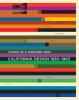
California Design, 1930-1965
<b>The first comprehensive examination of California's mid-century modern design, generously illustrated.</b><p>In 1951, designer Greta Magnusson Grossman observed that California design was "not a superimposed style, but an answer to present conditions.... It has developed out of our own preferences for living in a modern way." California design influenced the material culture of the entire country, in everything from architecture to fashion. This generously illustrated book, which accompanies a major exhibition at the Los Angeles County Museum of Art, is the first comprehensive examination of California's mid-century modern design. It begins by tracing the origins of a distinctively California modernism in the 1930s by such European émigrés as Richard Neutra, Rudolph Schindler, and Kem Weber&#x3b; it finds other specific design influences and innovations in solid-color commercial ceramics, inspirations from Mexico and Asia, new schools for design training, new concepts about leisure, and the conversion of wartime technologies to peacetime use (exemplified by Charles and Ray Eames's plywood and fiberglass furniture).</p><p>The heart of <i>California Design</i> is the modern California home, famously characterized by open plans conducive to outdoor living. The layouts of modernist homes by Pierre Koenig, Craig Ellwood, and Raphael Soriano, for example, were intended to blur the distinction between indoors and out. Homes were furnished with products from Heath Ceramics, Van Keppel-Green, and Architectural Pottery as well as other, previously unheralded companies and designers. Many objects were designed to be multifunctional: pool and patio furniture that was equally suitable indoors, lighting that was both task and ambient, bookshelves that served as room dividers, and bathing suits that would turn into ensembles appropriate for indoor entertainment.</p><p><i>California Design</i> includes 350 images, most in color, of furniture, ceramics, metalwork, architecture, graphic and industrial design, film, textiles, and fashion, and ten incisive essays that trace the rise of the California design aesthetic.</p><br>The first comprehensive examination of California's mid-century modern design, generously illustrated.<br>Wendy Kaplan is Department Head and Curator of Decorative Arts and Design at the Los Angeles County Museum of Art.<br>This book beautifully documents how climate, immigration, and industry influenced California's modern design aesthetic.--<i>Publishers Weekly</i>--<br><p>...[F]ascinating stuff, rich with detail and new discoveries.</p>--<i>NZ House and Garden</i>--<br>
$65.95