
Home/
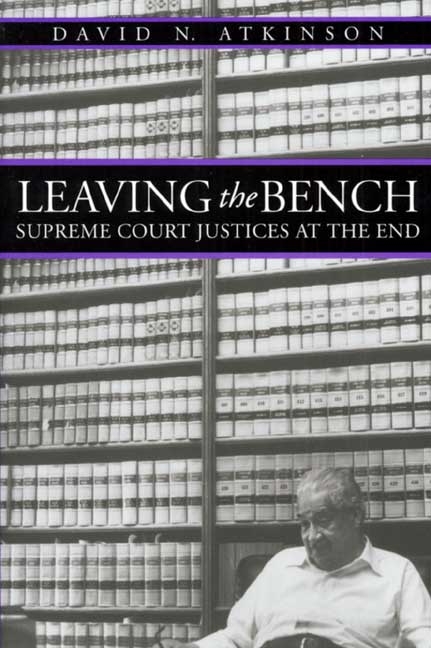
Leaving the Bench: Supreme Court Justices at the End
Leaving the Bench: Supreme Court Justices at the End
No customer reviews yet
ISBN 9780700610587
University Press of Kansas
Suffering from a bad heart, emphysema, glaucoma, and deafness, Thurgood Marshall finally retired from the Supreme Court at the age of 82 in spite of having always claimed "I was appointed to a life term, and I intend to serve it." Many observers felt he should have left much earlier.
Life appointments make Supreme Court justices among the most powerful officials in government and allow even dysfunctional judges to stay on long after they should have departed. For that reason, when a justice leaves the bench is often as controversial as when he's appointed. This first comprehensive historical treatment of their deaths, resignations, and retirements explains when and why justices do step down. It considers the diverse circumstances under which they leave office and clarifies why they often are reluctant to, showing how factors like pensions, party loyalty, or personal pride come into play. It also relates physical ailments to mental faculties, offering examples of how a justice's disability sometimes affects Court decisions.
David Atkinson examines each of the nearly 100 men who have left the bench and provides anecdotal glimpses into the lives of famous and obscure justices alike. He reveals how men like Salmon Chase and William O. Douglas determinedly continued to serve after suffering strokes, how Joseph McKenna persevered despite knowing he was professionally unqualified, and how, long before Thurgood Marshall, the ailing octogenarian Gabriel Duvall finally retired after struggling to protect another ideological position on the Court.
Ultimately, Atkinson shows just how human these people are and enhances our understanding of how the Court conducts its business. He also suggests specific ways to improve the present situation, weighing the pros and cons of mandatory retirement and calling for reform in the delegation of duties to law clerks--who in recent years have dominated the actual writing of many justices' decisions.
As the current Court ages, how long might we expect justices to remain on the bench? Because our next president will likely make several appointments, now is the time to consider what shape the Supreme Court will take in the next century. Offering a wealth of information never before collected, Leaving the Bench provides substantial grist for that debate and will serve as an unimpeachable reference on the Court.
About the author
Product details
BrandUniversity Press of Kansas
Pub dateMay 28, 1999
ISBN-100700610588
ISBN-139780700610587
LanguageEnglish
Dimensions8.75 × 0.75 × 6 in
Weight1 lb
Last updated 2026-04-26 03:33
$34.94
Only 9 left in stock — order soon
Delivery by Thursday, September 10, 2026
Sign in to Add to Saved list
Fast checkout
Pay with Apple Pay or Google Pay when available.
Payment received
We are registering your order now. Please stay on this page while we redirect you to the confirmation page.
Free delivery on orders over $35.
15-day returns. Any reason.
Secure checkout. We never store card details.
Readers who bought this also bought
More from Legal Profession