
Home/
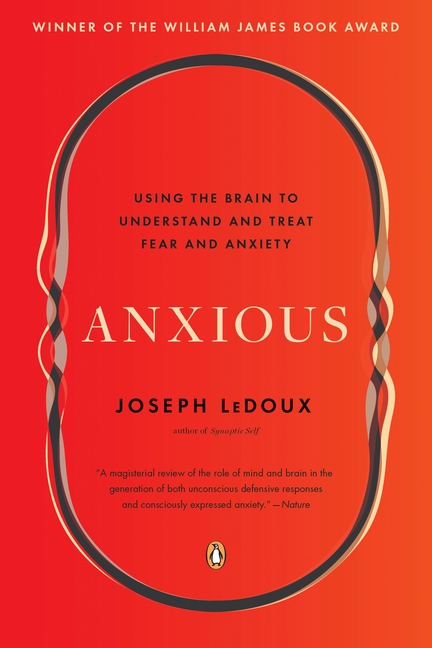
Anxious: Using the Brain to Understand and Treat Fear and Anxiety
Anxious: Using the Brain to Understand and Treat Fear and Anxiety
No customer reviews yet
ISBN 9780143109044
Penguin Books
"A rigorous, in-depth guide to the history, philosophy, and scientific exploration of this widespread emotional state . . . [LeDoux] offers a magisterial review of the role of mind and brain in the generation of unconscious defense responses and consciously expressed anxiety. . . . [His] charming personal asides give an impression of having a conversation with a world expert." --Nature
A comprehensive and accessible exploration of anxiety, from a leading neuroscientist and the author of Synaptic Self
Collectively, anxiety disorders are our most prevalent psychiatric problem, affecting about forty million adults in the United States. In Anxious, Joseph LeDoux, whose NYU lab has been at the forefront of research efforts to understand and treat fear and anxiety, explains the range of these disorders, their origins, and discoveries that can restore sufferers to normalcy.
LeDoux's groundbreaking premise is that we've been thinking about fear and anxiety in the wrong way. These are not innate states waiting to be unleashed from the brain, but experiences that we assemble cognitively. Treatment of these problems must address both their conscious manifestations and underlying non-conscious processes. While knowledge about how the brain works will help us discover new drugs, LeDoux argues that the greatest breakthroughs may come from using brain research to help reshape psychotherapy.
A major work on one of our most pressing mental health issues, Anxious explains the science behind fear and anxiety disorders.
Praise for Anxious
"[Anxious] helps to explain and prevent the kinds of debilitating anxieties all of us face in this increasingly stressful world." --Daniel J. Levitin, author of The Organized Mind and This Is Your Brain on Music
"A careful tour through the current neuroscience of fear and anxiety . . . [Anxious] will reward the informed reader." --The Wall Street Journal
"An extraordinarily ambitious, provocative, challenging, and important book. Drawing on the latest research in neuroscience (including work in his own laboratory), LeDoux provides explanations of the origins, nature, and impact of fear and anxiety disorders." --Psychology Today
About the author
Product details
BrandPenguin Books
Pub dateAug 23, 2016
ISBN-100143109049
ISBN-139780143109044
Paperback480.0 pages
LanguageEnglish
Dimensions8.9 × 6 × 1.1 in
Weight1 lb
Last updated 2026-04-25 04:21
$14.16
$20.00
29% off
You save $5.84 · list price $20.00
Only 7 left in stock — order soon
Delivery by Monday, September 7, 2026
Sign in to Add to Saved list
Fast checkout
Pay with Apple Pay or Google Pay when available.
Payment received
We are registering your order now. Please stay on this page while we redirect you to the confirmation page.
Free delivery on orders over $35.
15-day returns. Any reason.
Secure checkout. We never store card details.
Readers who bought this also bought
More from Psychopathology - Anxieties & Phobias