
Home/
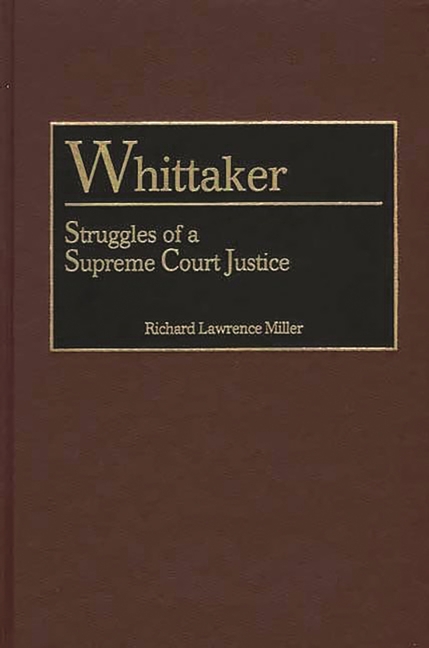
Whittaker: Struggles of a Supreme Court Justice
Whittaker: Struggles of a Supreme Court Justice
No customer reviews yet
ISBN 9780313312502
A Kansas farm boy, who talked his way into law school despite his lack of a high school diploma, Charles E. Whittaker was admitted to the bar before graduation and became the stereotype of a demanding, workaholic attorney. In a thirty-year practice representing Midwest corporations, he became universally admired among Missouri lawyers, and the American Bar Association called him one of the best selections ever made for the Supreme Court. Yet the very characteristics that made Whittaker one of the most acclaimed choices ensured that his service would be catastrophic both for the Court and for him. By the time he left that bench, legal scholars considered his performance on the Court as one of the saddest.
Whittaker was apolitical, yet won judicial appointments requiring strong support from politicians of national strength. He was a hard-line law and order judge who was horrified by the death penalty. During the turbulent 1960s, he called for rational discussion of public issues, yet gave inflammatory speeches linking the civil rights movement to Communism. He was the epitome of his era's Main Street conservatism. Most biographies of justices deal with those who had great influence on law and society. From an institutional standpoint, however, this study of a justice who failed sharpens our understanding of how the U.S. Supreme Court differs from other judicial bodies and fills a surprising gap in the Court's history.
About the author
Product details
Pub dateNov 30, 2001
ISBN-100313312508
ISBN-139780313312502
LanguageEnglish
Last updated 2026-04-24 21:39
$92.70
In stock — ships in 24 hours with free tracking
Delivery by Monday, September 14, 2026
Sign in to Add to Saved list
Fast checkout
Pay with Apple Pay or Google Pay when available.
Payment received
We are registering your order now. Please stay on this page while we redirect you to the confirmation page.
Free delivery on orders over $35.
15-day returns. Any reason.
Secure checkout. We never store card details.
Readers who bought this also bought
More from Lawyers & Judges