
Home/
Company They Kept
Company They Kept
No customer reviews yet
ISBN 9780807854068
The University of North Carolina Press
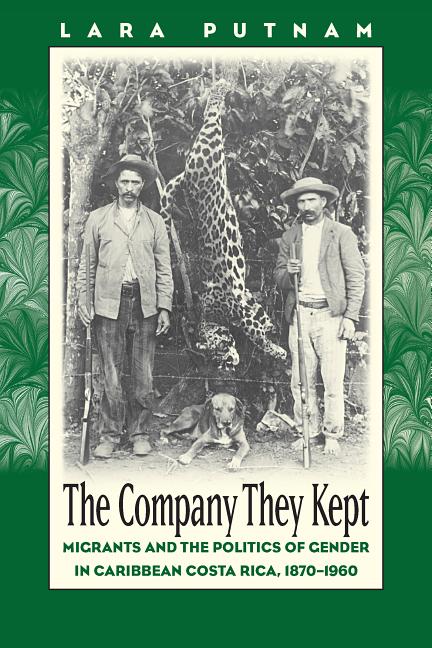
In the late nineteenth century, migrants from Jamaica, Colombia, Barbados, and beyond poured into Caribbean Central America, building railroads, digging canals, selling meals, and farming homesteads. On the rain-forested shores of Costa Rica, U.S. entrepreneurs and others established vast banana plantations. Over the next half-century, short-lived export booms drew tens of thousands of migrants to the region. In Port Limón, birthplace of the United Fruit Company, a single building might house a Russian seamstress, a Martinican madam, a Cuban doctor, and a Chinese barkeep -- together with stevedores, laundresses, and laborers from across the Caribbean.
Tracing the changing contours of gender, kinship, and community in Costa Rica's plantation region, Lara Putnam explores new questions about the work of caring for children and men and how it fit into the export economy, the role of kinship as well as cash in structuring labor, the social networks that shaped migrants' lives, and the impact of ideas about race and sex on the exercise of power. Based on sources that range from handwritten autobiographies to judicial transcripts and addressing topics from intimacy between prostitutes to insults between neighbors, the book illuminates the connections between political economy, popular culture, and everyday life.
About the author
Product details
BrandThe University of North Carolina Press
Pub dateOct 7, 2002
ISBN-100807854069
ISBN-139780807854068
Paperback320.0 pages
LanguageEnglish
Dimensions9.25 × 0.71 × 6.12 in
Weight1 lb
Last updated 2026-04-25 04:20
$44.48
In stock — ships in 24 hours with free tracking
Delivery by Monday, September 14, 2026
Sign in to Add to Saved list
Fast checkout
Pay with Apple Pay or Google Pay when available.
Payment received
We are registering your order now. Please stay on this page while we redirect you to the confirmation page.
Free delivery on orders over $35.
15-day returns. Any reason.
Secure checkout. We never store card details.
Readers who bought this also bought
More from Anthropology - Cultural & Social