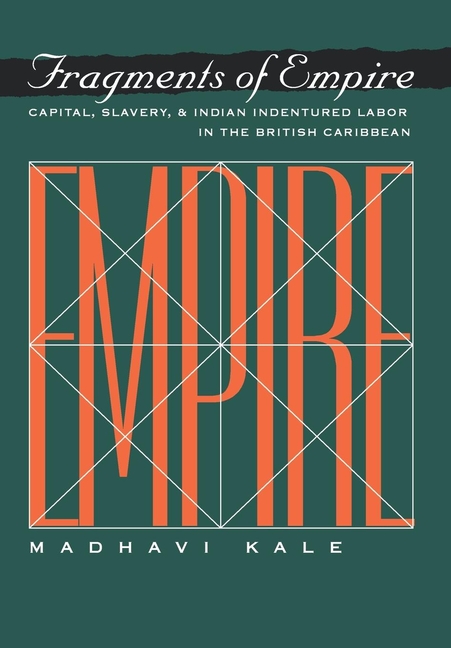
Fragments of Empire: Capital, Slavery, and Indian Indentured Labor in the British Caribbean
$53.81
Payment received
We are registering your order now. Please stay on this page while we redirect you to the confirmation page.
- In Stock - Ship in 24 hours with Free Online tracking.
- FREE DELIVERY by Tuesday, April 28, 2026
- Secure checkout
- 15-day returns
- 24/24 Online
- Yes High Speed
- Yes Protection
Description
When Great Britain abolished slavery in 1833, sugar planters in the Caribbean found themselves facing the prospect of paying working wages to their former slaves. Cheaper labor existed elsewhere in the empire, however, and plantation owners, along with the home and colonial governments, quickly began importing the first of what would eventually be hundreds of thousands of indentured laborers from India.
Madhavi Kale draws extensively on the archival materials from the period and argues that imperial administrators sanctioned and authorized distinctly biased accounts of postemancipation labor conditions and participated in devaluing and excluding alternative accounts of slavery. As she does this she highlights the ways in which historians, by relying on these biased sources, have perpetuated the acceptance of a privileged perspective on imperial British history.
Product Details
- University of Pennsylvani Brand
- Jan 29, 1998 Pub Date:
- 0812234677 ISBN-10:
- 9780812234671 ISBN-13:
- 240.0 pages Hardcover
- English Language
- 9.2 in * 0.9 in * 6.2 in Dimensions:
- 1 lb Weight:
Fast moving this week
 Chainsaw Man Box Set
$93.87
Chainsaw Man Box Set
$93.87
 National Geographic Atlas of the World, 11th Edition
$183.40
National Geographic Atlas of the World, 11th Edition
$183.40
 Invincible Compendium Volume 2
$51.64
Invincible Compendium Volume 2
$51.64
 Naruto Box Set 2: Volumes 28-48 with Premium
$128.57
Naruto Box Set 2: Volumes 28-48 with Premium
$128.57
 Diary: Divine Mercy in My Soul (Revised)
$11.61
Diary: Divine Mercy in My Soul (Revised)
$11.61
 Netter's Anatomy Flash Cards
$41.84
Netter's Anatomy Flash Cards
$41.84
 It's Not You: Identifying and Healing from Narcissistic People
$18.57
It's Not You: Identifying and Healing from Narcissistic People
$18.57
 Amygdala
$49.86
Amygdala
$49.86
 Mom, I Want to Hear Your Story: A Mother's Guided Journal To Share Her Life & Her Love
$13.71
Mom, I Want to Hear Your Story: A Mother's Guided Journal To Share Her Life & Her Love
$13.71

Money Back
Love it! Use it! Reuse it!

Free Shipping
Shipping is on us

Free Support
24/24 available