
Skip to content
Home/ History and Legacy of Isotype
History and Legacy of Isotype

History and Legacy of Isotype

No customer reviews yet ISBN 9781350359062 Bloomsbury Visual Arts

Based on extensive archival research, this open access book provides a fresh perspective on the early history of Isotype and pictographic communication, with new information about largely unknown episodes throughout its development.

The picture-script Isotype (International System of Typographic Picture Education), previously conceived as the Vienna Method of Pictorial Statistics, evolved through numerous publications and exhibitions in the early 20th century. Christopher Burke and Günther Sandner trace how its development responded to differing cultural and political climates, through a period when the idea of a universal language - an artificial or planned language - was linked to ideas of internationality and democratic planning. This book explores in depth, for the first time, the early picture-statistical work carried out at Austrian institutions during a new era of visual education and communication during and after World War II.

Examining the work of Isotype's initiators - Otto Neurath, the founding director of The Social and Economic Museum of Vienna, the artist Gerd Arntz, and Marie Reidemeister, who performed the role of 'transformer', a prototype of the modern information designer - this book challenges existing conceptions of an enormously influential pictographic language. Richly illustrated throughout with over 60 examples of work by key figures, this book provides a comprehensive history of Isotype and offers critical reflections on its legacy within, and relevance to, contemporary design practice.

The eBook editions of this book are available open access under a CC BY-NC 4.0 licence on bloomsburycollections.com.

About the author

Product details

BrandBloomsbury Visual Arts
Pub dateSep 5, 2024
ISBN-101350359068
ISBN-139781350359062
Paperback208.0 pages
LanguageEnglish
Dimensions9.15 × 0.55 × 6.2 in
Weight1 lb
Last updated 2026-06-28 09:51
$34.26
Only 2 left in stock — order soon
Delivery by Monday, September 14, 2026
Qty
Sign in to Add to Saved list
Free delivery on orders over $35.
15-day returns. Any reason.
Secure checkout. We never store card details.

Readers who bought this also bought

More from History & Criticism
See all
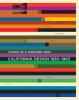
California Design, 1930-1965
<b>The first comprehensive examination of California's mid-century modern design, generously illustrated.</b><p>In 1951, designer Greta Magnusson Grossman observed that California design was "not a superimposed style, but an answer to present conditions.... It has developed out of our own preferences for living in a modern way." California design influenced the material culture of the entire country, in everything from architecture to fashion. This generously illustrated book, which accompanies a major exhibition at the Los Angeles County Museum of Art, is the first comprehensive examination of California's mid-century modern design. It begins by tracing the origins of a distinctively California modernism in the 1930s by such European émigrés as Richard Neutra, Rudolph Schindler, and Kem Weber&#x3b; it finds other specific design influences and innovations in solid-color commercial ceramics, inspirations from Mexico and Asia, new schools for design training, new concepts about leisure, and the conversion of wartime technologies to peacetime use (exemplified by Charles and Ray Eames's plywood and fiberglass furniture).</p><p>The heart of <i>California Design</i> is the modern California home, famously characterized by open plans conducive to outdoor living. The layouts of modernist homes by Pierre Koenig, Craig Ellwood, and Raphael Soriano, for example, were intended to blur the distinction between indoors and out. Homes were furnished with products from Heath Ceramics, Van Keppel-Green, and Architectural Pottery as well as other, previously unheralded companies and designers. Many objects were designed to be multifunctional: pool and patio furniture that was equally suitable indoors, lighting that was both task and ambient, bookshelves that served as room dividers, and bathing suits that would turn into ensembles appropriate for indoor entertainment.</p><p><i>California Design</i> includes 350 images, most in color, of furniture, ceramics, metalwork, architecture, graphic and industrial design, film, textiles, and fashion, and ten incisive essays that trace the rise of the California design aesthetic.</p><br>The first comprehensive examination of California's mid-century modern design, generously illustrated.<br>Wendy Kaplan is Department Head and Curator of Decorative Arts and Design at the Los Angeles County Museum of Art.<br>This book beautifully documents how climate, immigration, and industry influenced California's modern design aesthetic.--<i>Publishers Weekly</i>--<br><p>...[F]ascinating stuff, rich with detail and new discoveries.</p>--<i>NZ House and Garden</i>--<br>
$65.95