
Jazz Season: Selected Poems
$12.40
Payment received
We are registering your order now. Please stay on this page while we redirect you to the confirmation page.
- In Stock - Ship in 24 hours with Free Online tracking.
- FREE DELIVERY by Tuesday, April 28, 2026
- Secure checkout
- 15-day returns
- 24/24 Online
- Yes High Speed
- Yes Protection
Description
Edip Cansever (1928-1985) was born in Istanbul. He grew up in a country transitioning from the Ottoman Empire into a modern Turkish republic. As a student of law and sociology he was widely influenced by Western modernism and Eastern mysticism. To the outside world, Cansever's was an unremarkable life, spending most of it in Istanbul's Covered Bazaar where he worked as an antiques dealer. It's entirely fitting that a poet who came to define Turkish modernity should have made his living among the residues of its past. His extraordinary poetry speaks of familiar twentieth-century conditions, of rapid change, migrations and transports, of historical realities and ethnic diversities. His language mirrors the unique human landscapes of his city, a geo-political crossroads, of people dispersed by conflict and poverty, renewing themselves in a world unmapped. Cansever's poetics are marked by simplicity and depth. Often colloquial and irreverent, his accessibility belies the turbulent sexual and emotional undercurrents that run through much of his work. He's off-hand and humorous just when he's at his most serious. He can be profound and silly in a single breath. Central to Cansever's poetic idiolect are the demands he makes on its linguistic resources, stretching the expressive capacity of language to breaking point, a kind of jazz, alive to its own fluid semantic possibilities and cognitive riffs.
Cansever's poetics are marked by simplicity and depth. Often colloquial and irreverent, his accessibility belies the turbulent sexual and emotional undercurrents that run through much of his work. He's off-hand and humorous just when he's at his most serious. He can be profound and silly in a single breath. Central to Cansever's poetic idiolect are the demands he makes on its linguistic resources, stretching the expressive capacity of language to breaking point, a kind of jazz, alive to its own fluid semantic possibilities and cognitive riffs.
Throughout the poems Istanbul emerges not merely as a backdrop but as a living entity that reflects the complexities of human interactions. The natural world is never far away, but it is a more urgent urban earthiness that Cansever so memorably places before the Turkish reader, a landscape of pimps, thieves, petty criminals, prostitutes, and vagabonds. It would have been familiar to many but rarely seen in Turkish literature before his time.
Product Details
- Mar 27, 2026 Pub Date:
- 183738035X ISBN-10:
- 9781837380350 ISBN-13:
- English Language
Fast moving this week
 Chainsaw Man Box Set
$93.87
Chainsaw Man Box Set
$93.87
 National Geographic Atlas of the World, 11th Edition
$183.40
National Geographic Atlas of the World, 11th Edition
$183.40
 Invincible Compendium Volume 2
$51.64
Invincible Compendium Volume 2
$51.64
 Naruto Box Set 2: Volumes 28-48 with Premium
$128.57
Naruto Box Set 2: Volumes 28-48 with Premium
$128.57
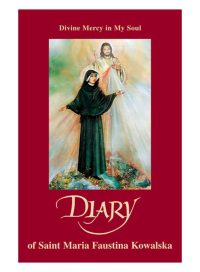 Diary: Divine Mercy in My Soul (Revised)
$11.61
Diary: Divine Mercy in My Soul (Revised)
$11.61
 Netter's Anatomy Flash Cards
$41.84
Netter's Anatomy Flash Cards
$41.84
 It's Not You: Identifying and Healing from Narcissistic People
$18.57
It's Not You: Identifying and Healing from Narcissistic People
$18.57
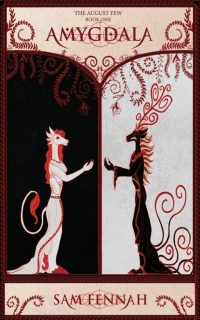 Amygdala
$49.86
Amygdala
$49.86
 Mom, I Want to Hear Your Story: A Mother's Guided Journal To Share Her Life & Her Love
$13.71
Mom, I Want to Hear Your Story: A Mother's Guided Journal To Share Her Life & Her Love
$13.71

Money Back
Love it! Use it! Reuse it!

Free Shipping
Shipping is on us

Free Support
24/24 available