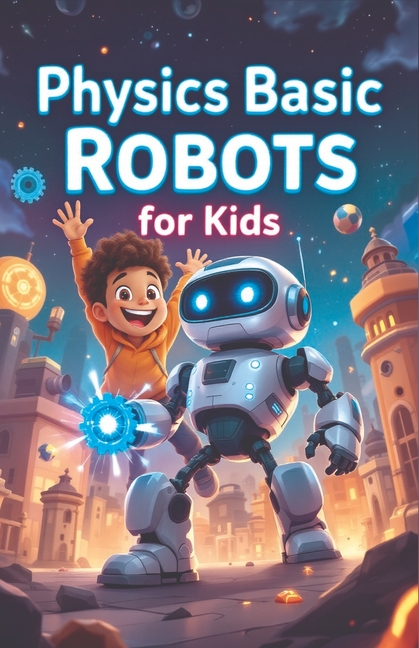
Physics Basic Robots For Kids: How Motors, Sensors, Gears, and Forces Power Real Machines - A STEM G
by Laudry, Khasan
$10.53
Description
Most robotics books for kids focus on building or coding. This one goes deeper, explaining the real science behind how robots work - from the torque inside a motor to the fluid pressure lifting a robotic arm. Each chapter unpacks one big physics idea, using robots as the ultimate real-world example.
Inside, young readers will discover:
- What components make a robot a robot - and the physics that brings machines to life
- How electric motors spin and convert electricity into movement
- How sensors use cameras, infrared light, and ultrasonic waves to help robots perceive the world
- How gears multiply force and change speed inside a machine
- How hydraulics and pneumatics use fluid and air pressure to power robotic arms
- The science of balance - center of gravity, gyroscopes, and stability
- How robot arms achieve degrees of freedom to reach, grab, and handle objects
- The physics of wheels, legs, and treads across different terrains
- How batteries, motors, and efficiency determine a robot's power and endurance
- What soft robots, swarm robots, and learning machines reveal about the future
Who this is for:
Written for curious readers ages 8-12, this book is ideal for students who want to understand why things work - not just how to build them. It suits independent readers, STEM enthusiasts, and young learners who ask questions that go beyond the surface.
Parents, teachers, and homeschoolers will find this a reliable, curriculum-friendly resource that bridges physical science concepts with real-world technology in a format kids can read on their own or together with an adult.
If your child has ever watched a robot and wondered what force, energy, or clever engineering is happening inside - this is the science explanation they have been waiting for. Scroll up and grab a copy today.
Product Details
- Mar 26, 2026 Pub Date:
- 3690830788 ISBN-10:
- 9783690830782 ISBN-13:
- English Language

Money Back
Love it! Use it! Reuse it!

Free Shipping
Shipping is on us

Free Support
24/24 available