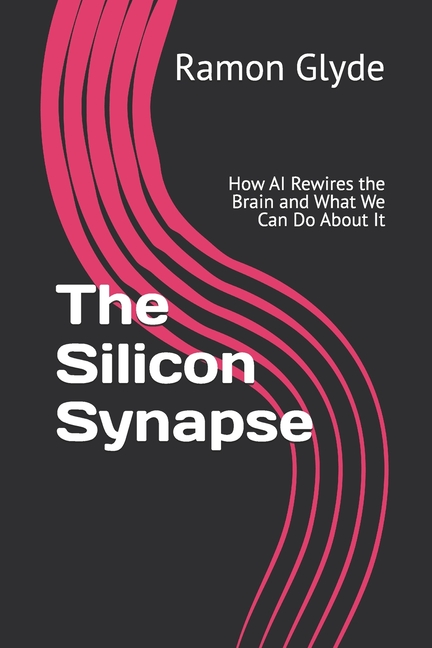
Silicon Synapse: How AI Rewires the Brain and What We Can Do About It
$9.66
Payment received
We are registering your order now. Please stay on this page while we redirect you to the confirmation page.
- In Stock - Ship in 24 hours with Free Online tracking.
- FREE DELIVERY by Tuesday, April 28, 2026
- Secure checkout
- 15-day returns
- 24/24 Online
- Yes High Speed
- Yes Protection
Description
A groundbreaking study from MIT revealed something alarming: when people wrote essays using ChatGPT, their brain activity plummeted by nearly half compared to when they wrote unaided. That's not just a small dip -- it's a dramatic drop in engagement. The brain, like any muscle, follows the principle of 'use it or lose it.' When we offload thinking to an AI, we're essentially telling our brains, You don't need to work so hard anymore. But here's the catch: the less we use our memory, critical thinking, and problem-solving skills, the weaker they become.
Children's brains are not just smaller versions of adult brains -- they are dynamic, rapidly developing systems uniquely vulnerable to the influences of artificial intelligence. Unlike adults, whose neural pathways are more fixed, children's brains are in a constant state of rewiring, absorbing information, emotions, and behaviors like sponges. When AI enters this delicate equation, it doesn't just assist learning -- it reshapes the very architecture of thought. Studies, like those highlighted in Deep Medicine by Eric Topol, reveal that AI-driven interactions can alter neural plasticity, the brain's ability to adapt and grow. For a child, whose prefrontal cortex -- the region responsible for reasoning and impulse control -- isn't fully developed until their mid-20s, this interference can have lifelong consequences. The brain's natural learning processes, which rely on trial, error, and human connection, are short-circuited when AI steps in as a surrogate teacher, friend, or even emotional confidant.
We live in a time where artificial intelligence is no longer a futuristic fantasy -- it's here, woven into the fabric of daily life. From chatbots that write essays to algorithms that curate our newsfeeds, AI is reshaping how we think, learn, and even feel. But with this convenience comes a pressing question: How do we balance the benefits of AI with the need to keep our minds sharp, independent, and deeply human? The answer lies not in rejecting technology, but in mastering the art of self-regulation and critical thinking.
Recent studies, like the one from MIT, reveal a troubling trend: when people rely on AI tools like ChatGPT to do their thinking for them, brain activity drops by nearly half compared to unaided writing. This isn't just about laziness -- it's about how our brains are wired. The principle of "use it or lose it" applies here just as it does to physical muscles. When we outsource mental effort, we weaken the neural pathways responsible for memory, problem-solving, and creativity. Over time, this could accelerate cognitive decline, increasing risks for conditions like dementia.
Product Details
- Feb 14, 2026 Pub Date:
- 9798248396528 ISBN-10:
- 9798248396528 ISBN-13:
- English Language
Fast moving this week
 Chainsaw Man Box Set
$93.87
Chainsaw Man Box Set
$93.87
 National Geographic Atlas of the World, 11th Edition
$183.40
National Geographic Atlas of the World, 11th Edition
$183.40
 Invincible Compendium Volume 2
$51.64
Invincible Compendium Volume 2
$51.64
 Naruto Box Set 2: Volumes 28-48 with Premium
$128.57
Naruto Box Set 2: Volumes 28-48 with Premium
$128.57
 Diary: Divine Mercy in My Soul (Revised)
$11.61
Diary: Divine Mercy in My Soul (Revised)
$11.61
 Netter's Anatomy Flash Cards
$41.84
Netter's Anatomy Flash Cards
$41.84
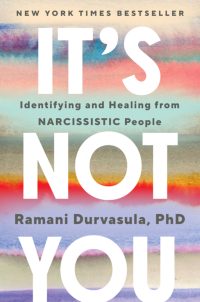 It's Not You: Identifying and Healing from Narcissistic People
$18.57
It's Not You: Identifying and Healing from Narcissistic People
$18.57
 Amygdala
$49.86
Amygdala
$49.86
 Mom, I Want to Hear Your Story: A Mother's Guided Journal To Share Her Life & Her Love
$13.71
Mom, I Want to Hear Your Story: A Mother's Guided Journal To Share Her Life & Her Love
$13.71

Money Back
Love it! Use it! Reuse it!

Free Shipping
Shipping is on us
Free Support
24/24 available